
Mosquitoes get most of the attention in The Springs, but ask homeowners what else comes through the open doors and the answer is dust. Fine desert dust hangs in the Dubai air for much of the year, and the shamal winds of spring and early summer can drive it through every open doorway in a townhouse. Fly screens are designed to stop insects, but a well-fitted screen does a quiet second job: it takes the edge off the dust and sand that would otherwise settle on every surface in the house.
Where the dust comes from
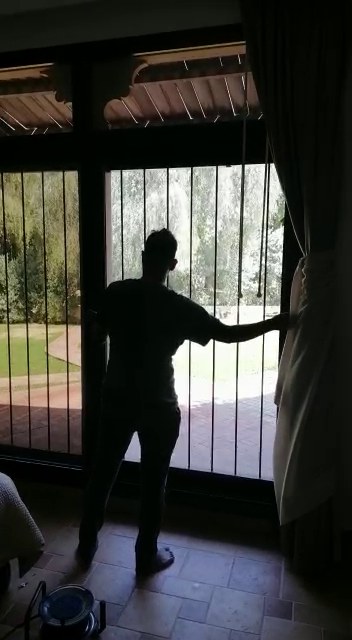
Dubai’s dust is fine and persistent. On calm days it drifts in on the breeze whenever a door or window is open. On windy days, especially during the shamal season, it arrives in visible gusts that coat garden furniture in minutes. Springs townhouses feel this more than apartments because the patio doors open straight onto the garden at ground level, and the small plots mean there is little distance between the open desert air and the living room. Upstairs windows catch it too, since the breeze that cools the bedrooms carries dust with it.
Nobody expects a fly screen to seal a house like a closed window. But there is a real difference between a wide-open doorway and a doorway with a fine mesh across it. The mesh breaks up the airflow and catches the heavier particles, so noticeably less dust makes it inside. Homeowners across The Springs find they dust less often once every opening is screened, particularly in the rooms that face the garden.
How screens help, and their limits
The mechanism is simple. Fine insect mesh presents a partial barrier to airborne particles: the air passes through, but the larger dust grains and most wind-blown sand do not. The effect is strongest on the coarser stuff, the grit that crunches underfoot and the visible film that settles after a windy day. Very fine dust, the kind that hangs in the air as haze, will still find its way through, so screens are a reduction rather than an elimination. Think of them as taking the worst of it off, which is exactly what makes the difference between dusting twice a week and dusting every other day.
The seal around the screen matters as much as the mesh. A screen that sits flush in its frame with no gaps at the edges forces the air through the mesh. A screen with gaps lets the dusty air stream straight past it. This is why workshop-made screens, measured to the exact opening, outperform off-the-shelf sizes: the custom fit is what makes the dust reduction real.
The openings that let in the most dust
In a Springs townhouse, the main dust routes are the same as the insect routes. The patio doors are the biggest, because they are the largest openings and they face the garden where wind-blown dust gathers. The kitchen door is next, often left open while cooking. Then the upstairs windows, which catch the stronger breeze at height. Screening all three tiers gives the full benefit. Leaving the patio doors unscreened while screening the windows is like locking the windows and leaving the front door open: the dust comes through the biggest gap.
Keeping screens effective in dusty conditions
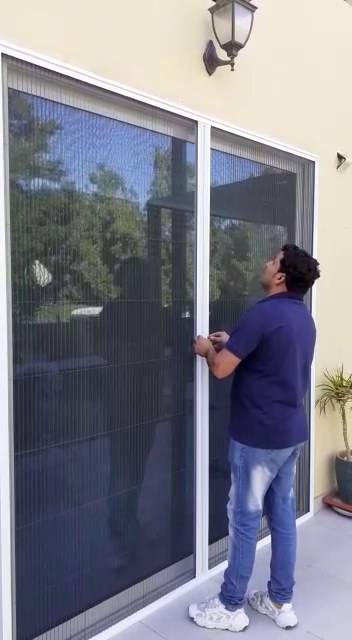
Screens that catch dust need cleaning, or the dust they have caught starts to restrict the airflow. The maintenance is simple: brush or vacuum the mesh every few weeks, more often in the windy season, and rinse it down occasionally with water. A clean screen lets the breeze through freely while still filtering the particles. Sliding tracks deserve attention too, since dust collects in them and can make panels stick; a quick brush-out keeps them running. Well-maintained screens also last longer, because grit sitting in the mesh and tracks accelerates wear.
Screens as part of a cleaner home
For the full effect, pair screened openings with a few simple habits. Run the screens closed rather than leaving doors wide open on dusty days, shake out doormats regularly so tracked-in grit does not add to the airborne dust, and keep garden areas near the doors swept so there is less loose material for the wind to pick up. None of this is complicated, and together with a full set of well-fitted screens, it keeps a Springs villa noticeably cleaner through the dusty months. If your screens are old and gap-ridden, start with our fly screen repair service: a re-tensioned, properly sealing screen filters dust far better than a sagging one.
Do fly screens really reduce dust?
Yes, noticeably. Fine mesh catches the heavier dust and sand particles while letting air through. It will not stop the very finest haze, but it takes the worst of it off.
Which openings matter most for dust?
The patio doors first, since they are the largest openings facing the garden, then the kitchen door and the upstairs windows.
How often should I clean the screens?
Brush or vacuum the mesh every few weeks, and more often during windy periods. A clean screen filters better and lets more breeze through.
Will old, sagging screens still help with dust?
Much less. Gaps around a poorly fitting screen let dusty air stream straight past the mesh. Repair or replacement restores the filtering effect.
Next: Fly Screens in The Springs: The Complete Guide

