
Every Mudon townhouse has one opening that matters more than all the others: the rear sliding door between the living room and the garden. It is the widest doorway in the house, the route children take outside, and the opening most likely to let insects in. Getting the screen right on this one door changes daily life more than screening every window combined. If you are looking into fly screens in Mudon, start here.
Mudon sliding doors come in standard contemporary styles, usually two or three panels sliding on an aluminium track. The screen has to work alongside that track, match the door’s handing, and survive constant use. This article walks through the options, the fitting details, and the mistakes to avoid.
Know Your Door First
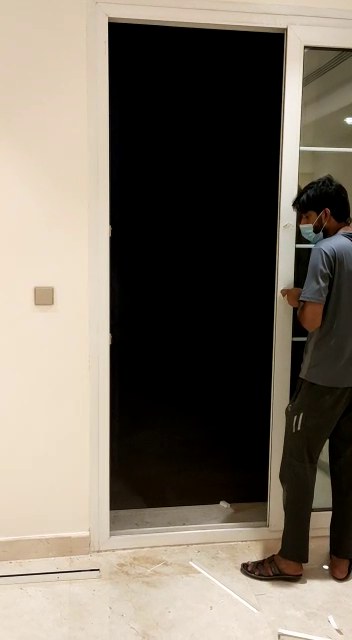
Before choosing a screen, look closely at how your door works. Note which panel slides and which is fixed, and whether it slides to the left or right. Check the depth of the reveal, because the screen needs its own space that does not clash with the door’s travel. Look at the threshold too. Many Mudon garden doors have a small step down to the patio, which affects where a screen track can sit.
Measure the full opening: the clear width from jamb to jamb and the height from the top of the door track to the underside of the frame head. These two figures decide what screen types are possible. A very tall doorway may need a reinforced frame. A shallow reveal may rule out some track systems. Take photos from inside and outside to show the full context.
Pleated vs Sliding Panel
Two screen types suit Mudon sliding doors. A pleated screen folds into a slim cassette at one side and pulls across the full doorway. A sliding screen panel runs on its own track parallel to the door and covers roughly half the opening at a time. Both keep insects out. They differ in how they handle the doorway.
The pleated screen suits families who want the whole doorway usable. It disappears completely when open, so garden parties, furniture moves and children streaming through all get the full width. The sliding panel suits simpler needs and tighter budgets. It has fewer moving parts, which means less to maintain. The compromise is permanent: half the doorway stays covered even when you would rather have it open.

Fitting Details That Matter
A sliding door screen lives or dies on its installation. The track must sit level, or the screen will drift or jam. The frame must be plumb against the reveal, or insects will find the gap at the corner. The brush seals along the edges need to meet the door frame without dragging. These are small things, but each one decides whether the screen works for years or becomes an annoyance within months.
The meeting point between the screen and the sliding door panel deserves attention. When the door slides open and the screen is closed, the two should overlap with a brush seal between them, not a visible gap. A good installer checks this with the door in several positions, not just one. Sliding door fly screens fitted this carefully feel like part of the door rather than an add-on.
Living With It Day to Day
A well-fitted sliding door screen becomes part of the household routine within a week. The family learns to close it behind them, the cat learns it can see the garden through it, and the living room stays comfortable with the door open. The screen takes the insect hits so the air conditioning does not have to compensate for a closed-up house.
Keep the track clear and the screen will glide for years. Dust from the desert edge near Mudon settles into the floor track, so a monthly vacuum takes thirty seconds and prevents most problems. Teach everyone to use the handle rather than pushing the mesh, and the screen will handle the daily traffic of a busy family home without complaint.
FAQs
Can a screen be added to my existing sliding door?
Yes. Screens mount to the frame or reveal around the door, not to the door itself. The installer works around the existing track and confirms there is room for the screen track before anything is ordered.
Will the screen match my door frame?
Screen frames come in standard colours that match typical aluminium door finishes. Bring a photo of your door frame when getting a quote so the colour can be matched properly.
What if my door is very wide?
Wide doorways are exactly what pleated screens are made for. A single pleated unit can span openings that would need two sliding panels, keeping the doorway clean and fully usable.
Does the screen affect how the door locks?
No. The screen is separate from the door’s locking mechanism. The door locks exactly as before, and the screen has its own catch or magnetic closure.
Ready to screen the busiest door in your home? Get a free quote for sliding door fly screens in Mudon.

