
The sliding patio door is the heart of a Mirdif villa. In the cooler months it stands open from morning to night, and the family moves between the living room and the garden without thinking about it. That open door is also the biggest single entry point for flies and mosquitoes in the house, which is why the screen for it deserves as much thought as the door itself.
A sliding door fly screen runs on its own track alongside the door, so the two slide independently. Open the glass door, pull the screen across, and the room gets the breeze with none of the insects. It sounds simple, and it is, but getting it right on a Mirdif villa means dealing with real-world details: worn tracks on older doors, sand in the runners, and doors that have settled over fifteen years. This guide covers what matters, alongside the other fly screens in Mirdif options for the rest of the house. The full product range is on the sliding door fly screens page.
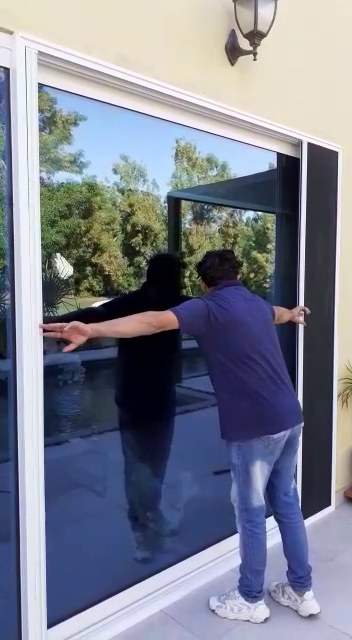
How a sliding door screen actually works
The screen is a framed mesh panel that hangs from rollers in a track, exactly like the glass door beside it. Most Mirdif patio doors have a second track channel already, originally meant for the builder’s screen, and the new screen uses it. Where there is no channel, a slim track is fitted to the frame. Either way, the screen and the door move independently, so you can have the door open and the screen closed, the screen open and the door closed, or any combination in between.
The panel is made to the exact height and width of your door, which is more important than it sounds. A screen that is a few millimetres short leaves a gap at the top where small insects walk straight in. Custom-made screens close the opening fully, top to bottom.
Old tracks, new tracks, and the sand problem
On older Mirdif villas, the track is often the weakest link. Years of sand, dust, and foot traffic wear the runners unevenly, and a track that has collected grit will make any screen feel stiff and rough. This is checked during the measurement visit. Sometimes the track just needs a deep clean and the rollers replaced; sometimes a new track is the honest answer.
Keeping the track clean is the one maintenance job that really matters. A quick brush-out of the runner every week or two, more often during dusty spells, keeps the screen gliding. It takes less than a minute and it is the difference between a screen that lasts years and one that starts grinding.
Screens for stacker and multi-panel doors
Some of Mirdif’s newer villas have stacker doors, where two or three glass panels slide and stack to open up most of the wall. These need a screen arrangement that matches: usually one or two screen panels on their own track that cover the opening when the glass is stacked back. It is measured as a system, not as a single panel, so that every position of the door has a matching screen position.
French-style double doors, common on the older villas, are a different job again. Each door leaf gets its own screen, or a single sliding screen covers the active leaf. The measurement visit sorts out which arrangement suits how your family actually uses the doors.
When the door itself needs attention first
Sometimes the glass door is the problem, not the screen. Doors that have dropped on their rollers, or whose locks no longer line up, make any screen feel wrong because the whole opening is out of true. A good measurement visit spots this. The screen can still be made to fit, but you will be told plainly if the door needs its own service first, because a screen fitted to a failing door is a compromise.
This is also the moment to think about pets. If the family dog pushes through the patio door fifty times a day, the screen needs pet-resistant mesh and sturdy rollers, specified up front rather than discovered later. The pet-friendly screens guide for Mirdif goes into the details.
Frequently asked questions
Can a sliding screen use my door’s existing track?
Often, yes. Most patio doors were built with a second channel for a screen. If the channel is worn or full of compacted grit, it may need cleaning, new rollers, or a replacement track, which the measurement visit will establish.
Will the screen keep out small insects as well as flies?
Yes, provided the mesh is fine enough and the panel fits the opening fully. Gaps at the top or sides are the usual way small insects get in, which is why exact measurement matters more than mesh choice alone.
How do I clean the track?
Brush out loose sand and dust first, then wipe the runner with a damp cloth. Avoid oil-based lubricants, which attract more grit. A clean, dry track is what keeps the rollers running smoothly.
Can the screen be locked?
Sliding screens can be fitted with a simple latch so they stay closed when you want them to, which is useful with young children who might otherwise slide the screen open and wander out.
Should I replace the door and the screen together?
Not necessarily. If the glass door itself is sound, a new screen on a serviced track is all you need. If the door has dropped or the rollers have failed, servicing the door first gives the screen a true opening to fit.
Next: Fly Screen Repair in Mirdif

