
Insects get the attention, but ask Mirdif homeowners what they wipe off their windowsills every week and the answer is dust. Fine, pale, everywhere. It comes on the shamal winds, it rises from nearby open plots and construction, and it settles on every surface in the house within days of cleaning. Open a window without a screen on a dusty day and the room tells the story by evening.
Fly screens were designed for insects, but they do genuine work against dust and sand too: the mesh breaks the airflow and catches a share of what the wind carries. This guide covers getting the most dust protection from your screens, alongside the other fly screens in Mirdif guides. The fixed fly screens for windows used in most bedrooms are the simplest starting point.

Where Mirdif’s dust comes from
Some of it is simply the desert. Wind-blown fine dust is part of life across Dubai, and Mirdif’s open streets and garden plots give it room to move. Some of it is local and temporary: construction nearby, landscaping work, a neighbour’s villa renovation. And some of it is the garden itself. Bare soil beds, gravel areas, and lawn edges all release fine particles when the wind picks up or the irrigation has just run and dried.
Calm spells bring little dust; shamal days bring a lot, and those are the days an unscreened open window does the most damage indoors. Screens take the edge off exactly when it matters most.
Mesh density and the airflow trade-off
Here is the central decision. A finer mesh catches more dust, but it also passes less air. A coarser mesh breathes freely but lets more fine dust through. There is no perfect answer, only the right balance for each room.
For bedrooms, where the window is often open at night in the cooler months and dust settles on bedding, the finer mosquito-net weave earns its place twice over: it stops the small biters and it catches more dust. For living areas with big patio doors, where airflow is the whole point of opening up, standard mesh is usually the better balance. The rooms that face the dustiest direction, often the ones facing open plots or the prevailing wind, deserve the finer weave whatever their function.
This is a room-by-room specification, made at the measurement visit. The mosquito nets guide covers the insect side of the finer weave; the dust benefit comes with it.
The rooms that need the most protection
Ground-floor rooms facing the garden collect the most dust, because dust travels low and the garden is a source as well as a destination. Bedrooms come next, because dust on bedding is felt rather than just seen. Kitchens, with their open windows during cooking, pull in whatever the wind is carrying at mealtimes.
Upper-floor street-facing rooms need the least, but fine dust drifts further than expected. A fully screened villa accumulates noticeably less dust than a half-screened one.
Cleaning routines that keep screens working
A dust-loaded screen is a screen doing its job, but a clogged screen stops doing it. Mesh heavy with dust passes less air and, in a strong wind, can bow or pull at its fixings. The routine is simple: vacuum the mesh gently with a soft brush attachment, or wipe with a damp cloth, every few weeks in calm weather and weekly during dusty spells.
Sliding door tracks deserve the same attention. Grit in the track grinds the rollers and eventually the screen drags, which tempts people to leave it open, which defeats the purpose. A quick brush-out of the runner takes less than a minute and keeps the screen in daily use, which is where the dust protection actually happens.
Windows, doors, and the rest of the plan
Screens are one part of a dust strategy, not the whole of it. They work best alongside the obvious companions: doors kept closed during the worst of a shamal day, garden beds mulched rather than left as bare soil, and the villa’s own cleaning routine. But screens are the part that works while you are not thinking about it, every time a window stands open.
For older Mirdif villas, there is a related point. Screens whose mesh has gone brittle or whose frames no longer sit square let dust stream through the gaps, sometimes worse than no screen at all, because the householder assumes the window is protected. If your screens are old, the repair guide explains how to tell whether re-meshing will bring them back to full effectiveness.
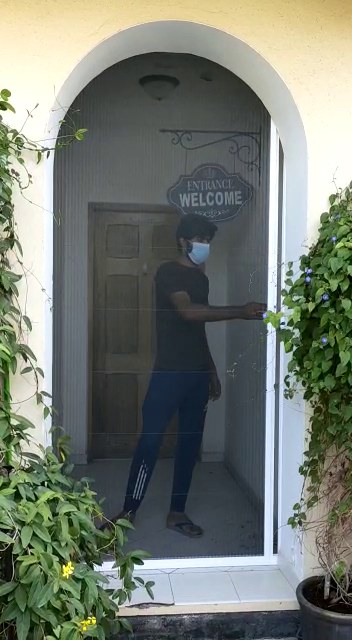
Frequently asked questions
Will fly screens block all dust?
No. They catch a meaningful share of wind-blown dust and sand while letting air through, but fine dust will always find its way in eventually. Think of screens as reducing the dust load, not eliminating it.
Does finer mesh mean noticeably less airflow?
Slightly. In a bedroom window the difference is small and the dust and insect benefits outweigh it. For big patio doors where airflow is the priority, standard mesh is usually the better choice.
How often should screens be cleaned in dusty weather?
Weekly during dusty spells, every few weeks otherwise. A soft brush vacuum or a damp wipe is enough. Clean screens pass more air and last longer.
What should I do during a sandstorm?
Close the windows. Screens are for dusty days and breezy days, not sandstorms. No mesh is meant to filter a full sandstorm, and the wind load can damage screens left exposed.
Do screens help with construction dust from nearby sites?
Yes, in the same way they help with wind-blown dust. If there is active construction next door, the finer weave on the facing windows is worth specifying, and more frequent cleaning keeps the screens effective.
Next: Fly Screens in Mirdif: The Complete Guide

