
Jumeirah is one of Dubai’s oldest beachfront communities, a long stretch of villas along Jumeirah Beach Road facing the sea. The housing here is a mix: older villas with traditional windows and wooden frames stand next to new builds with floor-to-ceiling glass and wide sliding doors. Family villas with private gardens sit a short walk from the beach, and most residents spend evenings with doors and windows open to the sea breeze. That is exactly when fly screens in Jumeirah earn their place. Open the villa to the evening air and the insects come too, drawn by garden planting, irrigation water and the damp air near the coast.
This guide covers which screens suit Jumeirah villas, how older and newer homes differ, and what to expect from measuring through to maintenance. The basics stay the same throughout: screens made to fit each opening, mesh that handles coastal air, and a few minutes of cleaning now and then.
Why Jumeirah villas need fly screens
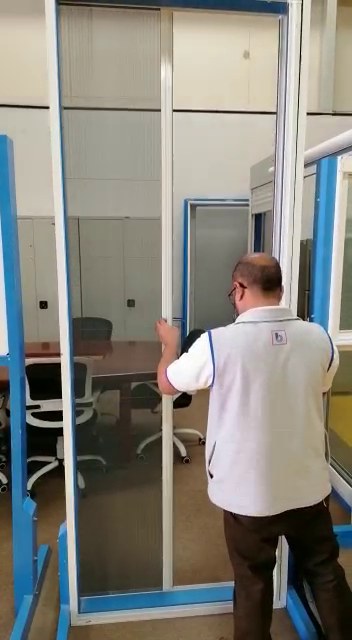
Jumeirah’s position by the water creates steady evening insect pressure. Gardens watered after sunset, swimming pools, damp planting beds and the general humidity near the beach all attract mosquitoes. Flies gather around outdoor dining areas. Many villas have four or five doors and windows open at once on a pleasant evening, and without screens the living room can fill with insects within minutes.
Sand is the other constant. Fine beach sand drifts in on the breeze, especially in villas on the sea-facing rows. Windows left open for airflow let a thin layer of grit settle on floors and furniture. Screens on open windows and doors cut down the worst of the windblown sand while the air still comes through, so the villa stays ventilated without the daily grit.
Screen types that suit Jumeirah openings
Most Jumeirah villas need a mix of screen types because the openings themselves vary. Casement and sliding bedroom windows take fixed screens, simple aluminium-framed panels that sit inside the window reveal and stay in place all year. They cost little to make, need almost no maintenance, and handle standard window sizes without fuss.
Sliding patio doors, the big garden-facing openings most Jumeirah living rooms have, need sliding door fly screens. These run on their own track alongside the glass panels, so you slide the screen across when the door is open and back when you close up. The screen becomes part of how the door is used every evening rather than something you fit and remove.
Very wide openings suit pleated fly screens. Some new builds have glass walls several metres wide, too wide for a single sliding panel. Pleated screens fold back into a slim side cassette, covering the full width when needed and disappearing when the opening is fully clear.
Older villas and traditional frames
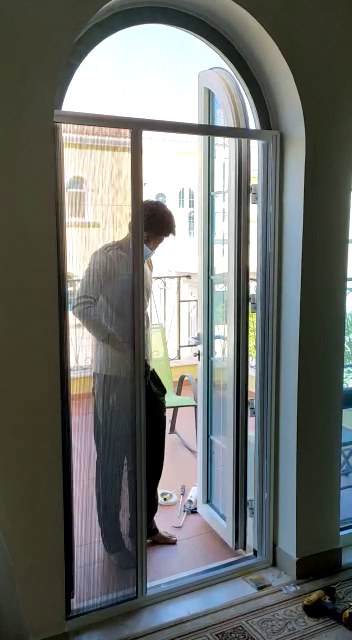
A good share of Jumeirah homes are older villas, and these bring their own fitting questions. Traditional wooden window frames vary in size from room to room, and some have deep reveals or slightly uneven edges after years of repainting. Screens for these windows are made to individual measurements rather than standard sizes, so each frame sits flush with no gap for insects.
Older wooden frames need a careful touch at installation. Fixings go into the surrounding reveal rather than the wooden frame itself where possible, so the original joinery stays intact. If a frame has warped slightly with age, the screen frame is built to follow the actual opening, not the nominal size, which matters more in older properties than in new ones.
Powder-coated aluminium frames can be finished to sit comfortably with white painted timber, varnished wood or the beige render common on older Jumeirah facades.
Looking after screens by the sea
Coastal air asks a little more of screens than inland conditions. Salt dulls aluminium over time, so wipe the frames down a few times a year, and rinse the mesh with a garden hose when salt and fine sand start blocking airflow.
Check sliding tracks for sand buildup. A track full of beach grit makes the panel stiff, and a quick vacuum of the track groove usually restores the glide. If mesh tears from a bump, a pet claw or simple wear, the panel does not need replacing. A fly screen repair service swaps the mesh in the existing frame, which keeps long-term upkeep simple.
FAQs
Do fly screens suit the older wooden windows in Jumeirah villas?
Yes. Fixed screens are made to each opening’s measured size, so uneven reveals are handled, and fixings go into the surrounding reveal to protect the timber.
What mesh handles sea air best?
Fibreglass and stainless steel mesh both cope well with coastal air. Fibreglass suits most homes and never rusts. Stainless steel adds strength where durability matters, such as low garden doors that take knocks.
Can screens cover my wide garden sliding doors?
Yes. Sliding screens run on a parallel track for standard widths, and pleated screens cover openings too wide for a single panel. Both are measured on site first.
How often should I clean screens near the beach?
A rinse or brush every month or two keeps airflow at its best. Sea-facing openings collect sand and salt faster, so clean those more often.
If you are ready to screen your villa, get a free quote for a measurement visit across Jumeirah.

