
A fly screen is a straightforward thing: a fine mesh held in an aluminium frame, fitted over a window or door so fresh air comes in and insects stay out. In Tilal Al Ghaf, it proves its worth almost immediately. Villas here are designed around glass, with full-height sliding doors that open onto gardens and patios, tall windows along stairwells, and family rooms that stretch toward the outdoors. On a pleasant evening the whole ground floor wants to be open to the breeze, and one unscreened doorway is all it takes for flies and mosquitoes to settle in.
This guide covers what matters before you fit screens in a Tilal Al Ghaf home: the screen types that suit the villa window styles here, how made-to-measure fitting works, what day-to-day upkeep involves, and how to pick the right option opening by opening. Our workshop builds fly screens in Tilal Al Ghaf to order, measured and fitted for each villa and townhouse.
Why the villa glass here makes screens a priority
Older Dubai villas had small windows and heavy curtains, and many families managed without screens for years. Tilal Al Ghaf is a different kind of home. The architecture favors light and openness: wide glass sliders, floor-to-ceiling panels, corner windows that fold a room into the garden. That is the appeal of the community, and it is also the reason insects have so many ways in. A single slider left open while dinner cooks can undo an evening.
The community setting adds to the case. Lagoons, parks, and planted streets bring birds and dragonflies, which most residents welcome, along with mosquitoes after still evenings. Family life here happens outdoors as much as in: children play in gardens, meals move to the patio when the weather turns, and pets come and go through back doors. Screens let that life continue without trading fresh air for a house full of insects.
The screen types that suit Tilal Al Ghaf openings
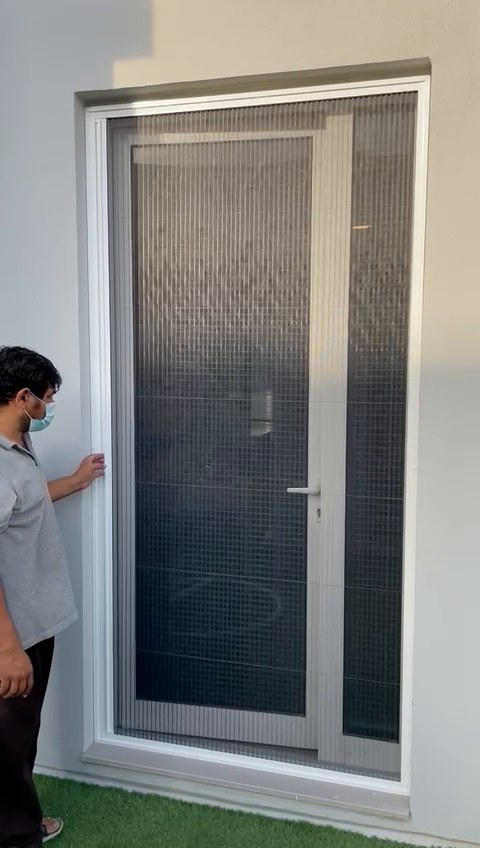
Most homes here need more than one kind of screen. Pleated screens suit the wide openings: sliding doors, front entrances with sidelights, and the tall window walls in double-height spaces. They fold back into a slim stack when not in use, so the view stays clear and the doorway stays fully open. For patio sliders, a sliding screen door on its own track is often the practical answer, since it mirrors how the glass door itself moves.
Smaller windows take simpler options. Hinged screens work well on casement and tilt-and-turn windows, lifting out easily when the glass needs cleaning. Kitchens and utility rooms often get fixed or magnetic screens, where the priority is a screen that never gets in the way of daily use. A good fitment starts by walking the villa and matching a type to each opening rather than forcing one style everywhere. You can see how the pleated option behaves on wide spans on our pleated fly screens page.

How made-to-measure fitting works
Off-the-shelf screens rarely survive contact with a new-build villa. Openings vary by a few millimetres from room to room, frames sit at slightly different depths, and a screen that almost fits is a screen with a gap insects will find. Made-to-measure means each opening is measured on site, the aluminium profile is cut to those exact dimensions, and the mesh is stretched and fixed before the frame goes in.
On fitting day the frames are fixed to the existing window and door frames with discreet fixings, sealed at the edges so nothing slips through the sides. Most rooms take well under an hour once the screens arrive from the workshop, and the villa stays fully usable throughout. Because everything is measured first, there is no cutting or adjustment inside the house and no damage to paintwork or tiling.
Choosing screen by screen
The useful question is not which screen is best in general, but which screen fits each opening. Bedrooms with tall windows benefit from pleated screens that disappear during the day and close at night when mosquitoes are most active. Kitchens suit hinged screens that lift off for a quick wipe after cooking. The main patio slider, the most-used opening in most villas, deserves the sturdiest option you will open and close a dozen times a day.
Looking after screens through the year
Screens ask for little. A soft brush or a vacuum with a brush attachment takes dust off the mesh every few weeks, and a rinse with plain water handles the rest. Pleated screens like their cords checked now and then so the folds stay even, and sliding screen doors benefit from a wipe along the bottom track where grit collects. Catching small issues early, a loose corner or a tired roller, keeps a screen working for years.
FAQs
Do new-build villas in Tilal Al Ghaf come with fly screens?
Most handovers do not include them. The windows and doors arrive finished, but screening is left to the homeowner, which is why many residents fit screens in the first weeks after moving in.
Which opening should be screened first?
The patio or garden slider. It is the largest opening and the one left open most often, so screening it first gives the biggest change for a single screen.
Can screens be fitted without damaging the window frames?
Yes. Made-to-measure frames fix to the existing frames with small discreet fixings and edge seals. Paintwork, tiling, and the window finish are left untouched.
How long does a full villa take to screen?
Measuring takes one visit. Fitting usually happens on a single day once the screens are made, with the house fully usable throughout.
Ready to screen your villa? Tell us about your openings and we will measure, make, and fit screens to each one. Get a free quote and start with the rooms that matter most.

